
The Chant of Hebrew Vowels…

Share

Some Keys and Proposals to Rediscover a Judeo-Christian Imaginal and Open to Research in the Footsteps of Marcel Jousse1.

The approach and reading of biblical texts, even today, often remain practiced in a purely intellectual mode. Small groups, frequently monastic, work by associating moments of meditation with their exegetical practice. The most commonly used technique today in Christian circles is the lectio Divina, a method inherited from the Jewish mystical tradition of PaRdéS2. This approach was interpreted and adapted by the fathers of the Christian Church and various doctors of the faith, such as Saint Benedict of Nursia, the patriarch of Western monks. However, this remains quite limited compared to the treasures offered by the mystical practices of Eastern Christians and, above all, those of the Hebrew tradition.

These latter disciplines and practices require some knowledge of sacred Hebrew to be meaningful. Their primary and ancient sources are found in an extensive body of literature known as the mysticism of the Celestial Chariot (Merkabah3 / מְֶרכָָּבה) and the Palace (Sifrout ha-Heikhalot / ספרות ההיכלות), developed in the wake of the Book of Ezekiel. This literature has been interpreted by numerous sages—Jewish, Christian, and Muslim alike. As a result, the techniques and disciplines abound, ranging from the simplest to the most complex, offering a powerful encounter with the Source of all life through the intercession of the Holy Spirit (ruach ha-kodesh / רוח הקודש).

In the footsteps of various 20th-century rabbis, such as Rabbi Aryeh Kaplan4, the compilations of texts by Marc Alain Ouaknin, and the miraculously rediscovered writings of Rabbi Kalonymus Schapiro5 (1889–1943) from the Warsaw Ghetto, the practices and mysticism of Jewish traditions have been revealed to a broader audience, with older texts translated and republished. The cultural enrichment that anyone can draw from this is thus increasingly accessible. However, this is only truly effective if one acquires some knowledge of biblical Hebrew. Without it, the « seeker » will miss the essential: the constant interplay between intellectuality and contemplation. This back-and-forth sows seeds, with each feeding the other—intellectuality leading back to contemplation, and vice versa. Without some biblical Hebrew, it is impossible to access the « deep meaning » encountered in lived contemplation. Using Hebrew without understanding it risks locking oneself into practices akin to occultism or idolatry.

Moreover, the learning of sacred Hebrew should not be undertaken solely in the « modern mode » of university teachings, as is generally practiced today. These rely on pedagogical methods modeled after the teaching of other vernacular languages. Sacred Hebrew is not the language of a nation; it aims to edify the mystical Israel. It is a living language dedicated to the encounter with God. That said, one should not oppose the methods—traditional mystical pedagogy and modern pedagogy—for they are necessarily complementary. The sages of Israel, along with many doctors of the Christian faith, have emphasized that the linguistic rules of biblical Hebrew safeguard the proper understanding of the divine message6. Nevertheless, the modern university teaching of biblical Hebrew, while rich in its semiological exploration of vocabulary, does not foster in the learner the relationship with God intrinsic to sacred Hebrew—a relationship brought to life through the exercises of traditional Jewish mystical practices, particularly those of the PaRdéS mentioned earlier. To explore these exercises, working with Hebrew vowels offers a marvelous gateway, a wonderful first approach to the powerful techniques that coherently open to the Judeo-Christian theophany and, in particular, to a profound understanding of the sacred texts foundational to our civilizations.

It is worth noting that Kabbalah has crystallized the main mystical practices into synthetic techniques, which are particularly effective disciplines. We will delve into this in greater detail later. Similarly, these Kabbalistic techniques influenced numerous Catholic Christian mystics from the Renaissance7 onward. This is beginning to be recognized and accepted beyond a few specialist circles. The indiscriminate anathemas launched against these Kabbalistic techniques and traditional Jewish practices were too often the work of ignorants or pseudo-scholars—true fanatics driven by an irrational fear of seeing Christian work abandoned in favor of Judaism. In this stance, these censors primarily demonstrated their lack of faith and their shortcomings.

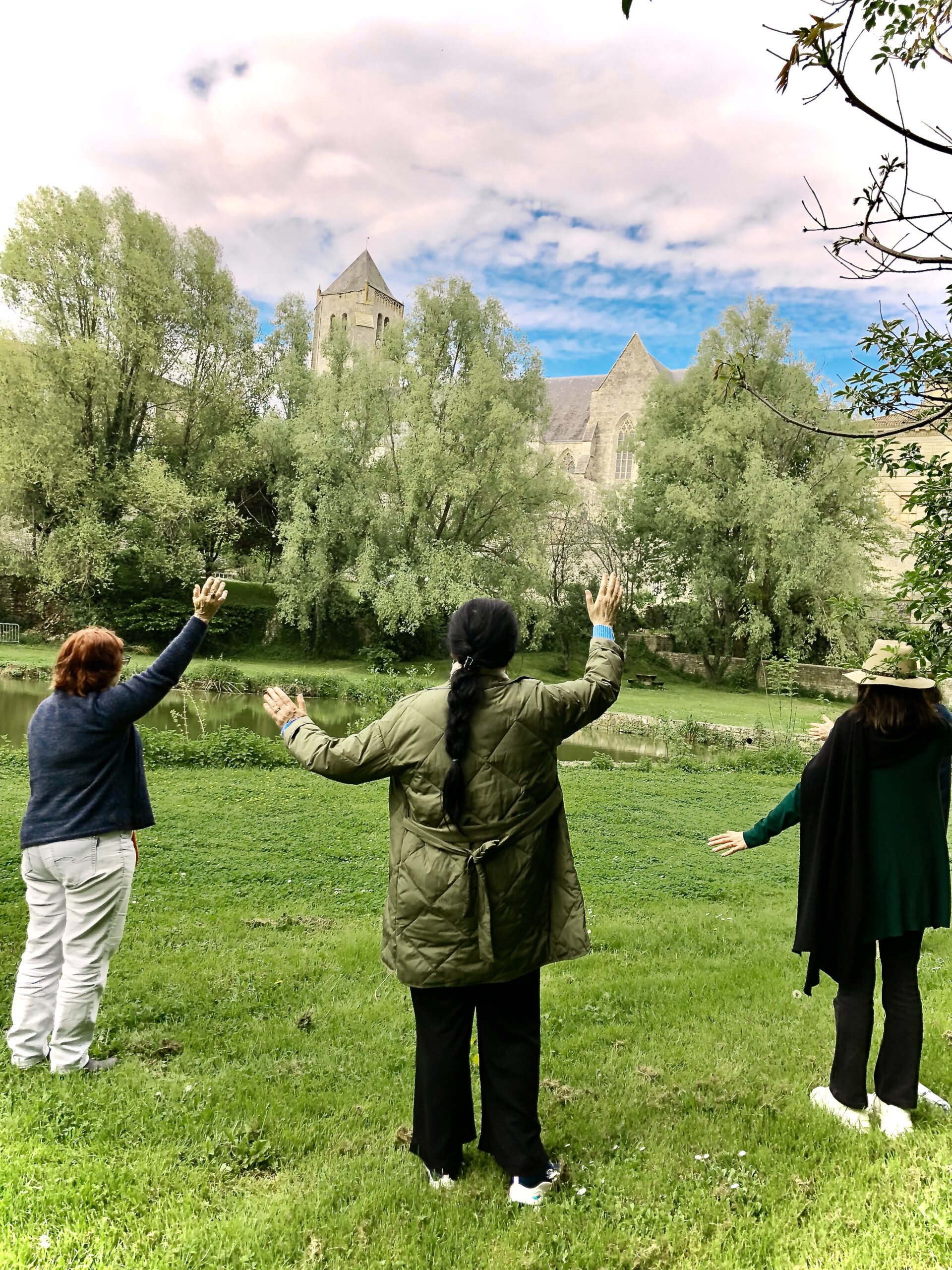
Basic resonance exercise in the body of 5 main Hebrew vowels

Moreover, one cannot ignore the influence of ancient and traditional Jewish mystical techniques and practices on similar practices of the « Desert Fathers » (3rd and 4th centuries), the Philokalia, and hesychasm. For example, the technique of folding over the navel, taught notably by Symeon the New Theologian (born in 949, died March 12, 1022), is directly linked to the « prophetic posture » (head between the legs), known as that of the prophet Elijah, practiced by Jewish mystics and developed in the Talmud8. Finally, let us not forget that « the call of the desert »—a withdrawal from the world to attach oneself to God, a movement of being where one experiences mystical practices and techniques in singularity and in communion with peers—is an utterly transversal theme, rich with millennia of sharing across monotheistic religions.

From Meditative Vocalization to Text Interpretation

The vocalization of biblical Hebrew vowels and the exercises derived from them are part of the traditional disciplines of Jewish mysticism and Kabbalah. For those who speak Hebrew, these potentially open a powerful understanding of the texts. Christians, too, can practice these exercises with benefit. Through the chant of Hebrew vowels, the body is engaged in a proper invitation to receive the gifts of what our Judeo-Christian traditions call the Holy Spirit, in Hebrew ru’aḥ ha-qodesh (רוח הקודש). This is reminiscent of the nine ways of prayer through the body of Saint Dominic9. The practice of vocalization and the chant of Hebrew vowels offer various approaches. The most essential aims to make the vowels (O, A, E/È/É, I, OU) resonate (vibrate) at different points in the torso and head. Under the influence of Abraham ben Samuel Aboulafia (born in 1240, died probably shortly after 1291), the chant of vowels was associated with various head movements10

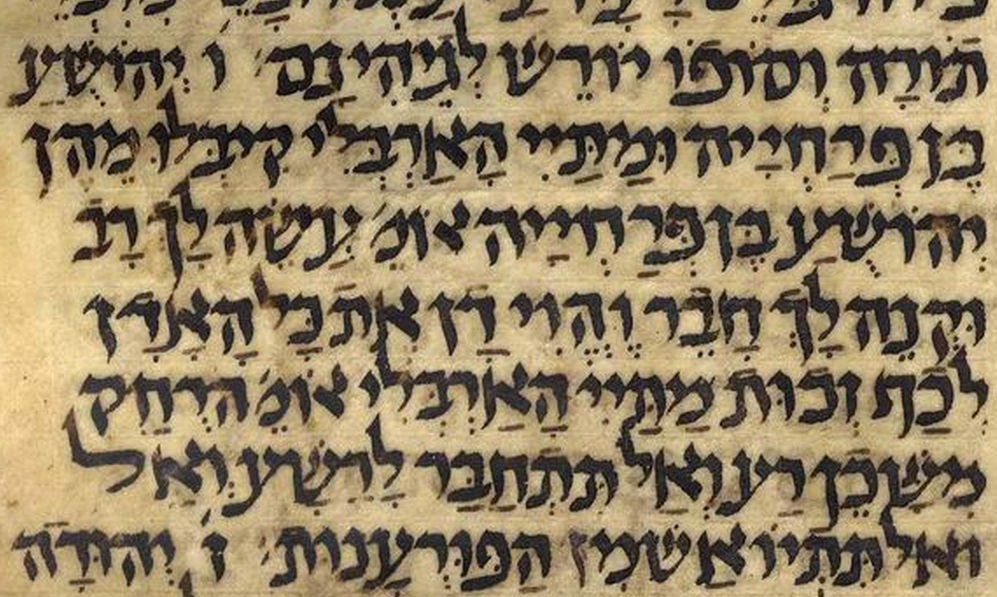
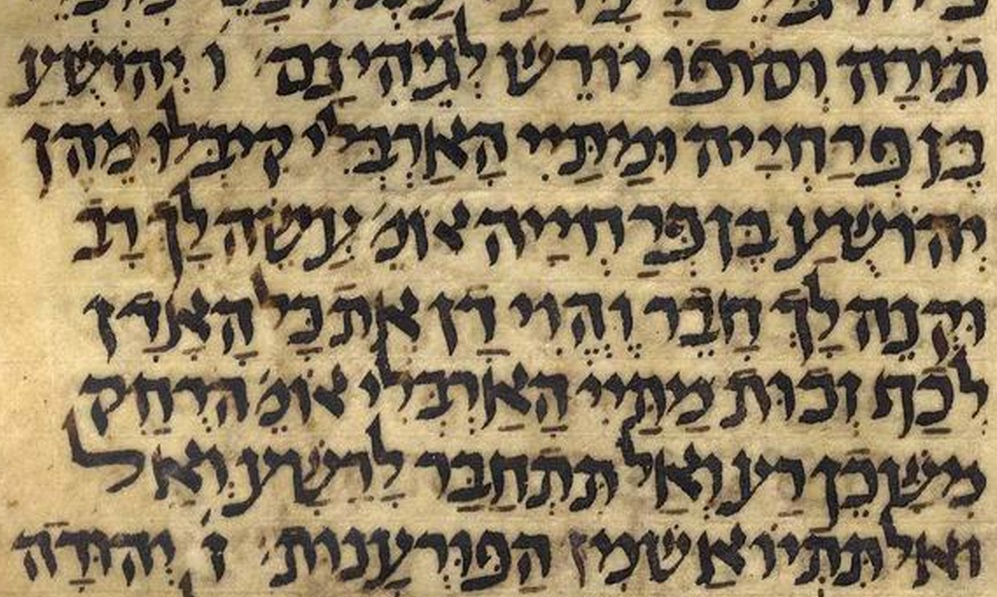
To understand the mystagogical, philological, and traditional value of the five main vowels of sacred Hebrew, it is helpful to review some basic linguistic elements. In biblical Hebrew, before the Masoretes, vowels were not written. It was the Masoretes who instituted signs to ensure that the pronunciation of biblical texts remained consistent throughout the diaspora. The vowels of Hebrew, like those of all so-called Semitic languages, had to be imagined for reading—an exercise in deciphering the meaning of each word, deduced from the potential and broader meaning of the sentence. It is thus about thinking the invisible through the visible. In Semitic languages, and particularly in the sacred texts of the Torah scrolls displayed in synagogues, vowels have always had this imaginative, mystagogical function, linked to the invisible—the divine—residing beyond creation.

Before the Masoretes10, the learning of vowels was primarily through oral teaching passed down by mothers to their children. Often through chants and melodies aimed at soothing their child from intrauterine life11, mothers were the first initiators. These traditions, which long survived in the Western Maghreb, remain poorly studied even today.

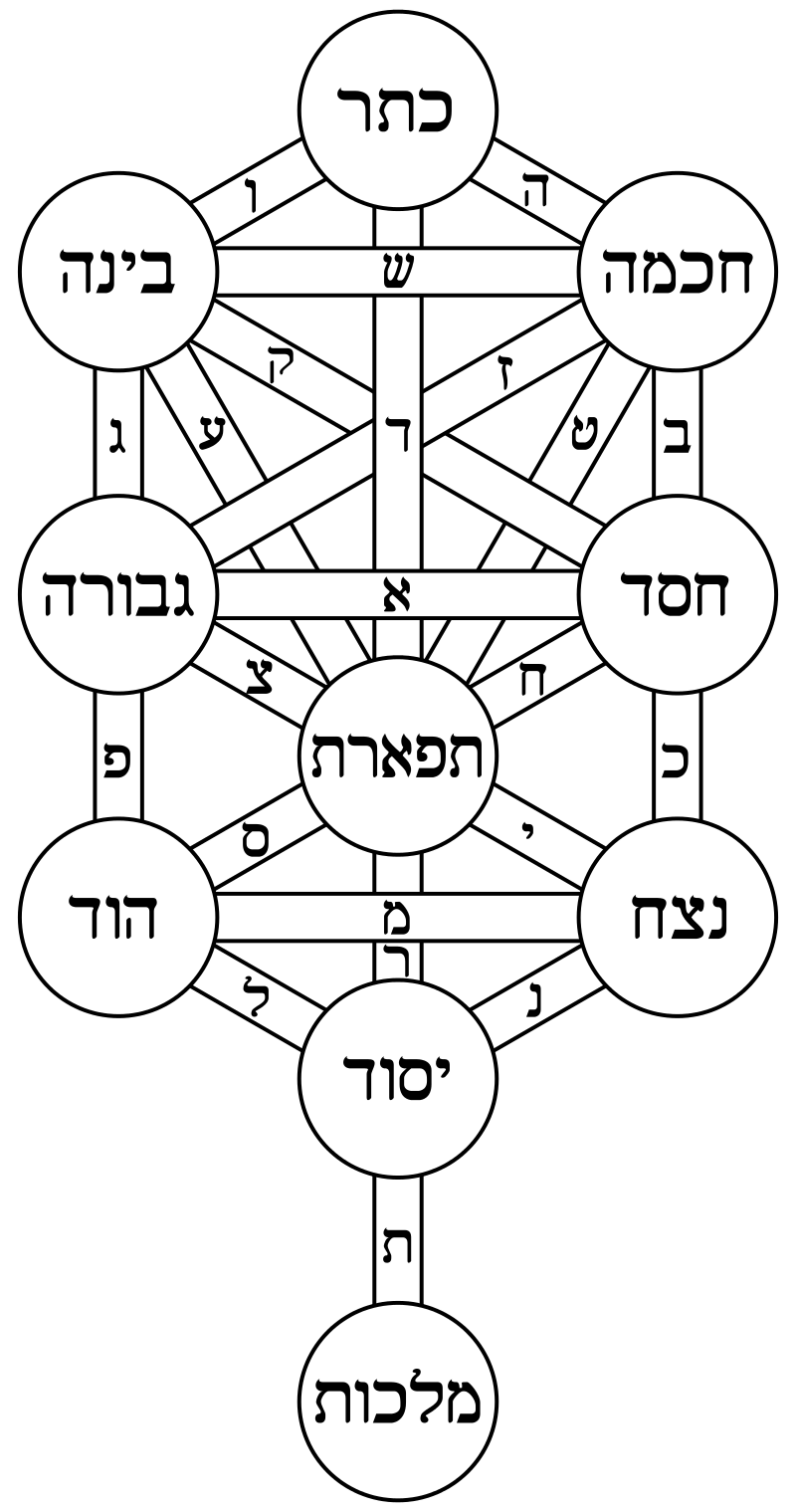
The 22 consonants of Hebrew belong to the visible and the temporal. In the perspective of Hebrew cosmogony, while they structure our universe as the origin of creation12, they are truly invested with meaning and divine power only through the vowels, which pertain to the divine breath (Holy Spirit) and thus to the invisible. The divine breath gave birth to the 22 letters, through which the universe was created. Expressed through the vowels, the divine breath orders the 22 consonants that compose creation. Vowels—invisible, ineffable, eternal—animate the visible within the temporal, serving as a mirror in which humankind can perceive its Creator.

In Semitic languages, vowels, being unwritten, form a sonorous, vibratory, and fluidic bridge, revealing the immaterial within the material. In this mystical vision, the sound of vowels structures matter. Vowels are the tools of the theophany of language, with the power to reveal the deep meaning of each thing, making perceptible the divine presence residing within it. According to Kabbalah, it is the vowels that reveal the name of God in every particle of creation. For example, verse 115 of the Bahir13 states:

"And the circle14, what does it designate? It is the vowel points of the Torah of Moses, all of which have a circular form; they fulfill, in the consonants, a function similar to that of the soul in the human body, which ceases to live as soon as the soul leaves it and which cannot accomplish any act, great or small, without the soul vibrating within it. It is the same with the vowel. One cannot pronounce any word, great or small, without resorting to the vowel."

This theophany and philology of vowels, rooted in the linguistics of sacred Hebrew, have also been extensively developed in the texts of the Zohar. The first to transmit a written mystical recitative practice related to this was Rabbi Abraham Aboulafia (mentioned earlier), primarily in his text Light of the Intellect15. In chapters 27, 28, and 29, he proposes various techniques to « rotate » the vowels on divine names.

The science of vowels and their chant on pentatonic scales is also a shared treasure of the universal heritage of Levantine cultures. Various modern anthropological studies on the theophanies of monotheistic traditions have highlighted principles recognizable in the mystical practice of chanting Semitic vowels. In my view, the vocal practices of ancient oral teachings of vowels belong to pedagogical and initiatory practices that enhance and complement those integrated into the renowned « Anthropology of Gesture » framework established by the Jesuit priest and anthropologist Marcel Jousse16. The recitation of vowels—unverbalized onomatopoeias—perfectly aligns with the « mimism17 » practices conceptualized by the anthropologist. A precise inventory of this remains to be done.

Furthermore, these pedagogical practices, part of the « Anthropology of Gesture » and enriched by Jewish mystical practices related to vowels, offer a potential Judeo-Christian resourcing of the Imago Templi, a concept primarily developed by Henry Corbin18 from the Sufi practices of Iranian Shiism. Corbin’s focus on Islam does not allow seekers rooted in Judeo-Christian cultural frameworks to access the practices of their own civilizational movement. The omission or underrepresentation of Kabbalistic sources in the concept of the Imaginal, from which Corbin’s Imago Templi emerges, has sparked significant scientific debate about the comprehensiveness of the mystical elements considered. It should be noted that this brilliant 20th-century thinker developed the concept of the Imaginal19 at a time when many elements of Jewish mystical traditions were poorly known in Europe, and in French academic circles, much of Christian mysticism was sidelined. These barriers are beginning to lift today, and many treasures are being made available to a wider audience20.

Traditionally, in biblical Hebrew—as still practiced today with the Torah scrolls used ritually in synagogues—and even in reading modern Hebrew, vowels must be « imagined » by the reader for comprehension and, especially, for aloud pronunciation of texts. This requires constant mental gymnastics from the Hebrew speaker, a process made easier when learned in childhood. Here, the technique of chanting vowels, which involves making them resonate in the body, proves an excellent aid for approaching biblical Hebrew as an adult.
Conclusion

In conclusion, it seems valuable to dwell on a Talmudic teaching that particularly emphasizes the chant of vowels as a tool for exploring the deep meaning of texts. Specifically, this concerns verse III of chapter I of the Song of Songs:

"Your perfumes are sweet to breathe; an aromatic oil that spreads, such is your name. That is why the young girls love you."

In Hebrew:

לְרֵיחַ שְׁמָנֶיךָ טוֹבִים, שֶׁמֶן תּוּרַק שְׁמֶךָ; עַל-כֵּן, עֲלָמוֹת אֲהֵבוּךָ

The Babylonian Talmud21, in its treatise Avodah Zarah at XXXV/b, proposes a practical exercise of interpretation of this verse through the « Tserouf » (permutation) of vowels. Here is a translation (elements in parentheses are my additions for clarity):

Rav Nahman, son of Rav Ḥisda, proposed a homiletic reading of a verse: "What is the meaning of what is written (Song of Songs 1:3): Your perfumes are sweet to breathe; an aromatic oil that spreads, such is your name. That is why the young girls love you. It is a metaphor evoking a scholar of the Torah. To what is a scholar of the Torah comparable? To a flask of pelatine (precious oil with sacred properties). When he transmits his knowledge, his perfume diffuses; when he withdraws from the world, his perfume does not diffuse.

The Gemara (Perfect Study) notes: Moreover, when the scholar of the Torah diffuses his knowledge, secrets he was unaware of are revealed to him. It is said: ‘The young girls (alamot / עֲלָמוֹת) love you’ (Song of Songs 1:3), and one can read the word alamot differently (with other vowels), yielding aloumoth (secrets). Thus, the verse says: Secrets love you. Furthermore, one can read: (you, the scholar of the Torah) the angel of death loves you. For if the word alamot (the young girls) is read differently (with other vowels), it becomes al mavêt (עַל מָוֶת / angel of death). Then the verse says: The angel of death loves you. Additionally, one can understand that the scholar of the Torah inherits both worlds—one is the present world (temporal), and the other is the World to Come (eternal)—for one can pronounce alamot (the young girls) differently (with yet other vowels), yielding olamoth (the worlds). Thus, the verse can be read: The worlds love you."

By inviting us to pronounce the word « young girls » (Hâlamoth / עֲלָמוֹת) with vowels different from those of the Masoretic text, the Talmud enables a spiritual deepening that serves as a teaching. It is worth pausing here to appreciate the richness of the vowel-chanting exercise at work.

First permutation: It suggests reading Hâloumoth (עֲלוּמוֹת) by replacing the "a" of the consonant lamed (ל) with an "ou" (written וּ). This implies that the scholar of sacred texts discovers new knowledge when sharing it. This is profoundly true: when we articulate what we know for someone else, striving to be understood, we integrate what we perceive from the other. Inevitably, we do more than formulate—we reformulate. In this act of reformulation to make things accessible, something new often emerges. Moreover, what is transmitted and deeply heard by the other produces an understanding shaped by their own uniqueness, surpassing what was initially said.
Second permutation: In this perspective of increasing understanding through sharing sacred texts, the subsequent vowel permutations find their full explanation. By enhancing our understanding of God through shared comprehension of sacred texts, we amplify God’s presence; our souls expand with immortality. This is how "the angel of death loves us," for what is mortal in us diminishes (al mavêt = עַל מָוֶת / angel of death).
Final permutation: We place an "o" on the consonant ayin (ע) in "young girls" (Hâlamoth / עֲלָמוֹת) instead of an "a," yielding Holâmoth (עוֹלָמוֹת), allowing us to read "the worlds love you." Indeed, in the biblical sense, by increasing the Immortal within us, our glory in God grows in the other world—that of eternity. Through this, we fulfill our earthly mission. By exercising our free will, we realize the hope placed in every human life by divine mercy. Thus, the temporal world and the eternal world love us.
  1. Marcel Jousse is a researcher in anthropology and linguistics. He was born on July 28, 1886 in Beaumont-sur-Sarthe and died on August 14, 1961 in Fresnay-sur-Sarthe. Ordained a priest in 1912, he joined the Society of Jesus in 1913. A student of Marcel Mauss, Pierre Janet, Georges Dumas, and Jean-Pierre Rousselot, he mingled with the greatest scholars of his time who recognized in him an exceptionally gifted researcher. ↩︎
  2. The Pardès (פרדס) is an acrostic of Jewish biblical exegesis. It refers to the four traditional exegetical approaches of rabbinic Judaism, the 4 levels of possible interpretations in the study of the Torah. This acrostic is composed of the initial letters of these different approaches:
    Pshat (פְּשָׁט), literal
    Remez (רֶמֶז), allegorical
    Drash (דְּרַשׁ), homiletic
    Sod (סוֹד), mystical
    In the tradition of Kabbalah and the Talmud, the PaRDeS resembles the word « paradise »; the « Pardès » designates the Garden of Eden, a place of divine presence where the student of the Bible can attain perfect beatitude and an almost complete understanding of God. ↩︎
  3. The main texts dealing with the mysticism of the Merkabah, that is, the vision of the heavenly throne and the divine chariot, date from the 5th and 6th centuries. This literature seems to have its sources in Hebrew oral traditions that may date back several centuries BCE. The texts of the Merkabah literature were imported to Europe from the study centers of Babylonia via Greece, Italy, and Germany, and they have been preserved in manuscripts dating from the late Middle Ages. These texts have strongly influenced Christian theology. Most are called the « Book of Hekhalot » (Book of Palaces) and contain descriptions of the palaces and the trials that the mystic undergoes in his journey to the divine throne. Christian mystics from the East, such as Saint John Climacus (born around 579, died around 649) and from the West like Saint Teresa of Avila (born March 28, 1515, in Gotarrendura in Old Castile and died October 4, 1582, in Alba de Tormes) refer to them. The main Jewish figures in this literature are the Tannaim Yohanan ben Zakkai, Rabbi Eliezer ben Hyrcanos, Rabbi Akiva, Ishmael ben Elisha the High Priest (the grandfather of the Tanna Rabbi Ishmael), and Nehuniah ben ha-Kanah (Babylonian Talmud Shabbat 80b). In his Guide for the Perplexed, Maimonides identifies the Ma’asé mercabâ with what he considers the highest of sciences, metaphysics, as leading to the knowledge of God. ↩︎
  4. Aryeh Kaplan, born on October 23, 1934, in the Bronx, New York, and died on January 28, 1983, in Brooklyn in the same city, was an American Orthodox rabbi, as well as a thinker and author of more than fifty books related to Judaism. From his essays on the Torah, the Talmud, and Kabbalah to his publications on the philosophy of Judaism, he is one of the important figures of the baal teshuva movement. His scientific training had earned him the title of « the most promising young physicist in the United States. » ↩︎
  5. Rabbi Kalonymus Shapiro (1889-1943) is an important figure in Hasidism and in the spiritual resistance to the genocide perpetrated by Nazi Germany. Kalonymus Shapiro was a rabbi in the Warsaw ghetto, and his texts, preserved in the earth, were found written in an attempt to find meaning in the face of this inconceivable ordeal; as well as an exposition of meditation and contemplation techniques inspired by the Kabbalah. The original editions of Rabbi Kalonymus Shapiro’s texts were published in Hebrew, Ech Qodech (The Holy Fire) in 1960, and Bnéi Machavah Tova (Children of a Good Thought) in 1989. Several translations have appeared in English. Rabbi Shapiro, also known as the Piaseczner Rebbe of the Warsaw ghetto, notably initiated the meditation technique called Hashkata (the ‘calm’), inviting us to observe our thoughts in a process integrating breathing in ‘three times’. A true anticipation of Mindfulness Meditation, the rebbe invites us to cultivate within ourselves, through the repetition of chosen words, the qualities we wish to embody. His texts are rich in implications that open up various practices of pronouncing divine names. ↩︎
  6. I invite you to read on my site: https://lun-deux.fr/, the text I wrote summarizing this same idea 6: The linguistics of biblical Hebrew, a crucial field for the proper theological understanding of the texts.
    ↩︎
  7. *To historically mark this assertion, I invite the reader to take note, at least, of two things. The first is the impressive work done by Professor Chaim Wirszubski (1915-1977) and published by Éditions de L’ÉCLAT, under the title: Pico della Mirandola and the Kabbalah. This book also contains the article by Professor Gershom Scholem (1897-1982): Considerations on the history of the beginnings of Christian Kabbalah. The second involves studying the life of a character who is David Drach, son-in-law of the Chief Rabbi of France (Emmanuel Deutz), who became the knight Paul-Louis-Bernard Drach (born March 6, 1791, in Strasbourg and died in January 1865 in Rome). A former French rabbi of Alsatian origin, Kabbalist, converted to Catholicism, he was a librarian of the Congregation for the Propagation of the Faith in Rome. ↩︎
  8. On this subject, I invite you to read « The Head Between the Knees. » Contribution to the study of a meditative posture in Jewish and Islamic mysticism, by Prof. Paul B. Fenton in the Review of Religious History and Philosophy, Vol.72, 1992/4 p. 413 to 426. ↩︎
  9. I invite you to discover on this subject, the book by Sister Catherine Aubin (Dominican): Pray with her body, in the manner of Saint Dominic, published by CERF. ↩︎
  10. Having practiced this technique for many years, I invite those who would like to approach this practically to contact me (bruno.fou32@gmail.com). ↩︎
  11. The Masoretes (Hebrew בעלי המסורה ba’alei hamassora, « masters of tradition ») became the transmitters of the Masorah, the tradition of transmission that aims to be faithful to the textual form of the Hebrew Bible, as well as its nuances of pronunciations and vocalizations, practiced in various eras. It was the task of the Masoretes to preserve both the memory of ancient pronunciations and meanings and to unify their practice. ↩︎
  12. To discover the ancient educational customs of Jewish mothers, I invite you to explore the work of 12David Rouach and notably his book published by Maisonneuve & Larose: ‘imma, or rites and customs and beliefs among Jewish women of North Africa. Likewise, that of Haim Zafrani (Franco- Moroccan historian, research officer at CNRS, born June 10, 1922, in Essaouira and died March 31, 2004, in Paris): Jewish Pedagogy in the Land of Islam, published by Adrien Maisonneuve. ↩︎
  13. We find accounts « specifying and augmenting » the divine process of creation of the universe as read in the Bible (Genesis) in many texts, notably in the Talmud. In the fundamental texts of Kabbalah, we find this account where God created the entire universe with the letters as they are presented in the Torah. Various works of the Jewish tradition teach that all the letters of the Hebrew alphabet were presented to IHWH and that He chose as the starting point, the second letter, Beith (□), which is the first letter of the first word of the Torah – Bereshit – « In the beginning ». Furthermore, the various combinations of letters (consonants and vowels) in all their permutations manifested to participate in the Creation of the universe (Zohar II, 204a). Thus says the Zohar: « When the Holy One, Blessed be He, created the world, He did so by the secret power of the letters » (Zohar IV, 151b). ↩︎
  14. The Sefer HaBahir (Book of Clarity) dates from the end of the 12th century of the current era and reinterprets an older treatise, the Sefer Yetsirah (the Book of Creation). Bahir can be translated as « in the Light, » but also as « in Serenity. » This book develops a system of Jewish mysticism based on the very ancient rabbinic notion of Shekhina, conceived as the Divine Immanence of the Ineffable and Holy Name whose inner life would be organized into ten creative powers, the Sefirot listed in the Sefer Yetsirah. ↩︎
  15. The Masoretic signs (see note 8) that allow for the recognition of the « good » vowels in the biblical texts appear in the form of dots, either circles. ↩︎
  16. Light of the intellect (’Or ha-Sekhel אוֹר הַשֶּׂכֶל) by Abraham Aboulafia, has been the subject of a magnificent and prestigious publication (2021) by Éditions de l’Éclat, translated and annotated by Michaël Saban in partnership with the Beit Ha-Zohar Institute, with the support of the Foundation for the Memory of the Shoah and the Foundation of French Judaism. ↩︎
  17. Marcel Jousse (see also note: 1) is the creator of a nomenclature of scientific studies in the pedagogical field: the Anthropology of Gesture. It aims to study the role of gesture and rhythm in the processes of knowledge, memory, and human expression. This science seeks to synthesize various disciplines: psychology, linguistics, ethnology, psychiatry, religious and exegetical sciences, secular and sacred pedagogy… The developments of the Anthropology of Gesture by neuroscience have highlighted the theories of Marcel Jousse, validating cognitive dynamics specific to mystical teachings. ↩︎
  18. At the forefront of these laws and mechanisms, Jousse places mimism, which is at the origin of all the processes of formation of speech, thought, and logical action in various ethnic environments. Mimism is this specific force of the Anthropos, as mysterious but also as undeniable and irrepressible as hunger or thirst, which causes the child to spontaneously replay the sounds, movements, the « gestures » (this word encompasses, for Jousse, everything that can be recorded by the senses) of their universe. ↩︎
  19. Henry Corbin, born on April 14, 1903, in Paris and died on October 7, 1978, in the same city, is a 19th philosopher, translator, and French orientalist. ↩︎
  20. What Jean-Louis Vieillard-Baron, emeritus professor of philosophy at the University of Poitiers, reminds us of: « The events that occur in the imaginal world cannot be understood according to our historical categories; they are manifestations of God, theophanies, in the most beautiful form, that of angels. Henry Corbin spoke of the Angel-Holy Spirit, of the vision of Christ as Christos Angelos: he found here the Neoplatonic tradition. » ↩︎
  21. In Catholic circles, the major difficulty comes from what is apprehended in Gnostic thought in relation to heresiology. And it is a true marker of the growing difficulty that separates the meaning of the words used in Catholicism on one hand and the academic world on the other. The word « Gnostic » which often qualifies this type of practices is linked, for Catholics, to Manichean deviations and to systems of thought that could be labeled as totalitarian. Historical Jewish Gnostic thought, as understood in the academic circles that have studied it, fundamentally rejects Manichean and dualistic deviations, even if these were inspired by Gnostic elements. The amalgamation of the « Catholic heresiological » vision was again recalled by Pope Francis in April 2018 with much virulence, stating that « …Gnosticism leaves no room for uncertainty and seeks an inner illumination that will make the Gnostic say: I know, and not: I believe. » But what the Pope rightly evokes regarding the essence of his thought is a deviation of the doctrines and practices grouped indiscriminately by heresiologists under the label « Gnostic. » Deviations that can be known by many other spiritual movements, particularly within Catholicism itself. If one remains vigilant to the traditional Judeo-Christian wisdom that invites to frame practices through permanent questioning (critical spirit and search for sources), references to peers (dialectic) and to the fathers (through texts), pride and totalitarian visions can hardly take part in the journey. ↩︎
  22. The Tserouf is an interpretative method that invites one to permute vowels and consonants of a word or phrase to discover its deep meaning. Practiced in Hebrew culture certainly several centuries BC, this practice is the subject of an impressive literature and mainly produced by the sages of the Kabbalah (Jews and Christians) from the medieval period to the present day. ↩︎

Création d’un groupe de Bibliodrame

Share

Marie Madelaine

Jeudi 10 avril 2025
Séance Découverte
17h30 – 20h30

Participation libre

Info & réservation :

bruno.fou32@gmail.com

&

Tel : 06 48 55 54 79

Le groupe de Bibliodrame sera encadré par une psychologue, psychothérapeute, psychodramatiste et un chrétien hébraïsant (voir la présentation des encadrants à la fin de cette page). Le groupe sera ouvert à tous et utilisera la bible en ses diverses et principales traditions. Chacun pourra venir avec sa bible, cependant, lors des séances sera à disposition (à minima) : la Bible juive dans son édition interlinéaire dite de la « Stuttgart » (éd. Alliance Biblique universelle), la Tob (éd. Biblio-cerf), la Second 21.

Le terme bibliodrame est composé de deux mots : Biblio = Bible, et Drama = action (grec). Le bibliodrame est donc une méthode qui permet de vivre la Bible en mettant en scène les récits et personnages bibliques. C’est une méthode active qui crée du lien entre le texte sacré et la vie de chacun.

Le bibliodrame permet de vivre personnellement et collectivement un court passage biblique. Le texte devenant acte, il invite chacun à se penser soi même en l’interprétant. Dans cette mise en mouvement, il produit la rencontre avec la parole de Dieu. Il s’adresse à l’être humain dans son entièreté, dans toutes ses dimensions : corporelle, spirituelle, psychique et sociale. Il peut être, aussi, un puissant outil pour le dialogue inter-religieux.

Aux racines de la pratique :

Ce qui est appelé communément « Bibliodrame », bien que sous des formes assez différentes, s’est lentement développé dans divers pays, principalement en Europe du Nord, tant dans les milieux catholiques que protestants. Divers groupes existent aussi dans les milieux juifs. Les premières expériences de ce type en milieu catholique se sont développées rapidement après le « Concile Vatican II ». Cette pratique est inspirée des pratiques thérapeutiques du « Psychodrame », une thérapeutique reconnue par les institutions médicales et hospitalière au niveau mondial et conçue par le psychiatre, psychosociologue et philosophe américain d’origine roumaine, Jacob Levy Moreno (1889-1974). Le Bibliodrame, par ailleurs, trouve ses racines les plus anciennes dans la méthode d’application des « 5 sens », recommandée par saint Bernard et saint Bonaventure. On peut aussi reconnaître la « Composition du Lieu » conçue par saint Ignace de Loyola dans ses Exercices spirituels. La « Composition du Lieu » vise à la contemplation de Dieu par des pratiques pouvant relever de l’art et notamment théâtral. On peut y voir aussi certaines analogies avec les recommandations de Maïmonide dans le « Traité des 8 chapitres » ou encore en diverses exercices de la mystique juive… Ou encore, de ce qui relève de l’ Anthropologie du Geste comme définie par le père Marcel Jousse (1886-1961). Les racines pluri-culturelles du Bibliodrame, permettent d’ouvrir cette pratique à toute personne ayant un intérêt pour la culture judéo-chrétienne.

Qui vous propose cette pratique ?

Florence Jacopé-Fouchereau née en 1971. Elle a une double licence : de sociologie et de psychologie. Elle est psychologue, psychothérapeute, psychodramatiste certifiée par l’IFREAP (Institut Français de Recherche et d’Application du Psychodrame). Son mémoire de certification porte sur la « concrétisation », c’est à dire le fait de rendre visible l’invisible, de montrer plutôt que de parler. Elle exerce en libéral à Melle (79) et anime des groupes de psychodrame réguliers. Ancienne directrice d’accueil collectif de mineurs, et famille d’accueil, elle a acquis une expertise en gestion et dynamique de groupe.

Bruno Jacopé-Fouchereau, né en 1963, poète, auteur, ancien grand reporter. Il étudia les grands mouvements religieux et leurs implications dans la géopolitique des grandes puissances. Collaborateur à Charlie-Hebdo, le Monde Diplomatique, Paris-Match, VSD, TF1, France 2, Canal +,… Auteur de cinq essais, il se consacre aujourd’hui à l’étude des principes et systèmes de «l’Imaginal» en rapport avec l’épanouissement social et individuel par la spiritualité des traditions judéo-chrétiennes. Hébraïsant, il transmet un certain nombre de techniques reçues d’une famille de marranes. Ces techniques singulières de « gestualisation de l’hébreu biblique » s’apparentent à l’anthropologie du geste (Marcel Jousse), et en permettent un apprentissage méditatif puissant.


Nous présentons ici un module basé sur une pratique régulière de trois heures tous les mois. Mais cette pratique peut-aussi être adaptée pour des journées entières, ou des week end. La question des rythmes et du mode des pratiques sera à définir avec le groupe de pratiquants

CADRE DE LA PRATIQUE :

Les séances sont ouvertes à toute personne ayant un intérêt pour les traditions judéo-chrétiennes et bibliques.

Le groupe cultivera activement la bienveillance envers les singularités pour libérer la parole et passer du « dit » au « dire ». Chacun pouvant ainsi renforcer et épanouir ce qui lui fait source.

Les temps de séances durent environ 3 heures (pratique)

Le groupe sera composé (outre les encadrants) de 10 participants maximum.

Il sera proposé une séance découverte (participation libre) qui débutera la saison de pratiques. La prochaine étant celle du 10 avril 2025 de 17h30-20h30 à la Maison Hilaire : 36 boulevard Anatole-France 86000 Poitiers

La participation financière individuelle aux séances (1 séance = trois heure) serait fixée à 45 € par personne et par séance. Ceci est à titre indicatif. Le module de pratiques s’adaptera, au mieux, au groupe. Une participation sociale sera proposée au cas par cas. Pour les demi-journées, des journées, ou des WE, les formules restent donc à étudier avec le groupe et les « lieux accueillants ».

DÉROULEMENT D’UNE SÉANCE (basique) :

Échauffement : Nous proposerons divers outils, respiration en trois temps, posture dite d’Élie (debout on se replie sur soit-même en expirant), accueil dans ses bras de l’enfant messie…

Le choix du texte se fera en fonction des propositions des participants. Ce choix pourra être accompagné par le « Dictionnaire des Noms Propres de la Bible » (Odelain et Séguineau éd. Cerf), mis à disposition lors des séances. Nous regarderons ensemble les versets bibliques retenus, puis nous en ferons une lecture. Nous réfléchirons et ferons alors un choix collectif d’une scène.

Il sera fait une nouvelle lecture du texte suivi d’un petit temps de méditation personnelle à partir des questions suivantes : qu’est ce qui vous touche dans cette scène ? Qu’est-ce qui capte votre intérêt ? Quels rôles vous semblent importants ?

Chacun choisit alors un personnage avec lequel il se sent une affinité dans la scène (le groupe, le cas échéant pourra être divisé en deux). Les encadrants veilleront à la juste participation de chacun, selon les élans et les désirs, et ceci au fil des séances. Il est important de comprendre que le rôle de témoin dans la scène est aussi agissant. Ainsi tout le groupe est debout et présent lorsque le passage biblique est joué.

Puis on passera à la mise en scène du texte choisi : installation spatiale, géographique de la scène et des personnages dans la salle. Nous pratiquerons l’Interview des personnages afin de permettre à tous de s’identifier à son rôle (cette pratique vient du Psychodrame). Enfin nous jouerons la scène.

Nous passerons alors à un temps de partage. Chacun raconte alors ce qui s’est passé pour lui, en tant que personnage (ou l’objet, ou le témoin…) incarné dans la scène.

Nous pratiquerons alors un temps dit de « dérolage » : Il s’agit d’une pratique typique du psychodrame où chacun quitte symboliquement son personnage, ceci pouvant se faire en mimant quelqu’un qui s’époussète du rôle qu’il vient de jouer. Ce « dérolage » permet de revenir pleinement à soi.

Nous reviendrons alors au verset joué. Chacun pourra exprimer ce que cela a fait bouger dans sa compréhension du texte et libre à chacun d’exprimer là où il a été touché personnellement par la scène.

À la fin de la séance, nous prendrons un moment de recueillement individuel, prière silencieuse. Il sera possible de partager aux autres ce qu’il a été mis, individuellement en prière.

Contact : bruno.fou32@gmail.com / Tel 06 48 55 54 79

Sortie du livre : « L’Union des souffles »

Share

« L’Union des souffles », le dernier livre de Bruno Jacopé-Fouchereau

Une parution aux Éditions Unicité, Collection Poètes francophones planétaires, sous la direction de Pablo Poblète.

Couv et 4e
Disponible dès le 12 octobre

Le livre peut-être commandé chez l’auteur (18 euros) qui vous dédicacera son livre. (sup. courrier suivi : 6,90€). Les livres peuvent être retirés chez l’auteur paiement sur place sur RdV : 06 48 55 54 79 .

VOICI UN LIEN POUR COMMANDER : https://www.paypal.com/ncp/payment/FY6BP8RMX4HRC

« L’UNION DES SOUFFLES » ou Le mystère hébraïque des Ailes de Mélusine…

Au centre du livre L’Union des Souffles vibre le mystère des ailes de la Fée Mélusine. Ce mystère se révèle à la lumière de son hébraïsation, racines de la chrétienté. Beaucoup de l’espoir surréaliste puisait là…

Pour découvrir ces merveilles promises, terre de tous les espoirs, Bruno Jacopé-Fouchereau nous entraine de Barcelone à Clisson en Bretagne, aux terres angevines berceau de Lancelot, puis de Jérusalem à Prague…

En ces Hauts-Lieux il « déposa » ses poèmes pour mieux entendre la source de toutes vies et interroger son Nom. L’Union des Souffles, avant d’être un recueil de poésies et de proses mystiques, est un témoignage concret d’une certaine pratique de l’Imaginal judéo-chrétien.

L’élan civilisateur d’Occident se morfond, ce type de pratiques peut être une fontaine de jouvence. Par cela nos racines se revitalisent, c’est notre seule chance d’échapper à la confusion, cause de toutes les violences… Mais tout doit se faire en rythmes et rendez-vous, en métaphorisations et créativités… En cela, la pierre de Jacob nous offre sa mémoire pour tisser de nouveaux cieux. La joie, l’authentique liberté, la sortie de l’esclavage, tout y est offert ! Ce recueil en est un manifeste. Rappelons-le, de Prague à Barcelone, en passant par les terres bretonnes, aux racines du Lupin poitevin, sans oublier Jérusalem, ce recueil invite aux-rendez-vous des merveilles, aux rythmes sacrés et pourtant séculiers, séculiers de tous temps. Rythmes sans lesquels notre présent est vain. Mélusine n’oubliait jamais son temps de Sabbath où elle plongeait en l’eau d’intelligence, mikvé purificatrice, bain de « surréalité », contemplation fluidique du non-manifesté, l’indicible, véritable structure du réel…

C’est ainsi, seulement et par ce rythme de retrouvailles, que la réalité commune se parle, que la cohérence se donne… Enfin la pierre trouve sa bouche et son langage est chant d’oiseau !

L’auteur :

Bruno Jacopé-Fouchereau, né en 1963, s’affirme en un mouvement d’être inspiré des légendes du Poitou. Pour lui,Mélusine est une grande tante, et Gargantua un cousin bien-veillant. Poète, auteur, mythologiste, hébraïsant, ancien grand reporter et spécialiste des organisations criminelles, terroristes, sectaires et totalitaires. Il étudia les grands mouvements religieux et leurs implications dans la géopolitique des grandes puissances. Collaborateur à Charlie-Hebdo, Le Monde Diplomatique, Paris-Match, VSD, TF1, France 2, Canal +,… Auteur de cinq essais, il se consacre aujourd’hui à l’étude des principes et systèmes de « l’Imaginal » en rapport avec l’épanouissement social et individuel par la spiritualité des traditions et mythologies judéo-chrétiennes. Hébraïsant, iltransmet un certain nombre de techniques reçues d’une famille de Marranes installées enBretagne au XVIIIe siècle. Ces techniques singulières de « gestualisation » de l’hébreu biblique s’apparentent à l’anthropologie du geste (télécharger un PDF), un concept établit par Marcel Jousse. Ces techniques, ont aussi une forte analogie avec celles de l’Hésychasme. Elles permettent un apprentissage méditatif puissant.

Conférence : Jésus ou le Messianisme à la lumière de la Torah !

Share

Le talmudiste Hervé Élie Bokobza évoquera divers aspects de son denier livre.

Samedi 14 septembre 2024 à 15h

Temple de Celles-Sur-Belle 79370

PARTICIPATION LIBRE
Son livre éponyme du titre de la conférence sera en vente

 » Le Jésus » d’Hervé Élie Bokobza, loin d’opposer judaïsme et christianisme, montre en quoi le fils de Marie peut constituer un pont de dialogue entre les deux fois qui, telles les deux femmes de la sculpture de Joshua Koffman, s’écoutent et se parlent en fraternité. « 
Rabbin Philippe Haddad

 » Hervé Élie Bokobza permet indubitablement à des chrétiens de mieux comprendre Jésus et son enseignement. Si ce livre, le fruit d’une longue recherche, contribue à ce que des juifs comprennent mieux qui était Jésus et ce qu’il a voulu vivre et faire, il aura rempli sa tâche. « 
Marc Rastoin SJ

Informations sur le conférencier et son livre :

06 48 55 54 79

Hervé Élie Bokobza est né en 1967 à Boulogne-Billancourt. Après une formation supérieure talmudique et rabbinique en France et aux États-Unis, il a publié quatre ouvrages en hébreu consacrés au Talmud et aux Sages d’Israël, ouvrages salués par les plus hautes autorités religieuses juives.

Il est enseignant et conférencier à Paris auprès de plusieurs centres d’études juives, chrétiennes et universitaires. Il est l’auteur de plusieurs ouvrages en français et en hébreu.

Voici une vidéo où Hervé Élie s’exprime sur son livre :

Le Baal Shem-Tov et l’Aleph-Beith

Share

Une anecdote de la vie du Baal Shem-Tov(1), évoquant la « centralité » de l’Aleph-Beith, ces 22 consonnes sacrées, vivifiées en leur nom par leurs voyelles…

Plein du désir de Dieu, si l’on n’a que les noms des 22 consonnes (donc vivifiées de leurs voyelles), grâce à elles on peut-être sauvé. Cette idée que l’Aleph-Beith est Longanime, chemin d’amour et de charité, et à l’origine même de la création par la puissance divine, est un thème récurrent de la mystique et spiritualité juive… On pourrait même dire fondatrice, et ceci on ne peut plus concrètement, de l‘élan civilisateur hébraïque qui perdure depuis plusieurs millénaires. Une puissance symbolique que l’on peut parfaitement voir à l’œuvre dans les récits historiques et mytho-historiques s’attachant à la résurrection d’Israël, à sa rédemption… Ce qui est aussi une nourriture spirituelle extrêmement précieuse pour les chrétiens, car elle s’inscrit aux racines de l’idée même de rédemption, qui se réalise non-pas par la honte, mais par la puissance du verbe, capacité à dire, un amour infini, inconditionnel et originel !

Voici donc un récit qui en porte la substance et met en scène l’extraordinairement et merveilleux rabbi, le Baal Shem-Tov. Cette légende suit les grandes lignes du récit qu’en fit Élie Wiesel dans son livre : « Célébration Hassidique », on trouvera divers apports que me confia un très jeune Rabbin de 72 ans à Prague. Je donnerais prochainement un autre récit évoquant la même substance, qui lui, met en scène le rabbin Juda Lœw ben Bezalel(2) dit le MaHaRaL (hébreu : מהר »ל pour Morenou HaRav Lœw, notre maître le rabbin Lœw).

Ce jour-là, plus qu’un autre, le Rabbi Israël Baal Shem-Tov, célèbre pour ses pouvoirs sur le ciel et la terre, débordant de grâces, chercha une nouvelle une fois, un peu comme le fit Abraham pour Sodome et Gomorrhe, à forcer la main du Créateur.

Brûlant d’impatience, il avait déjà essayé, à plusieurs reprises, de mettre fin aux épreuves de l’exil, aux souffrances et persécutions subies par Israël. Mais cette fois, il était sur le point de réussir. La porte s’ouvrait, le Messie allait surgir et consoler les enfants et les vieillards qui l’attendaient, qui n’attendaient que lui. La dispersion n’avait que trop duré, le peuple étincelle de Dieu trop épars, tout Israël, allait se rassembler dans la joie.

Scandalisé, fou de sa colère qu’il chérissait pourtant, Satan courut protester devant Dieu. Sans honte, il invoqua la loi — qu’il qualifiait sans rougir d’immuable. Arguant de l’histoire de la création, du bon sens et surtout de la Justice: « Mais de quoi ce rabbin se mêle-t-il ? Serait-ce à lui qu’il revient de juger le monde ? Et de savoir si l’humanité mérite déjà la délivrance? Avez-vous renoncer à votre trône ?… » Dieu fronça des sourcils… Satan continua sur le même registre : « L’avènement messianique ne peut se réaliser que lorsque certaines conditions seront réunies… Je vous le demande, le sont-elles ? » Dieu qui ne peut-être que justice et qui se souvenait aussi de la dernière visite de satan à sa cour où ce dernier vint en vain pour confondre job, s’en remis au bien-fondé de cet étrange plaidoyer.

Dieu fit proclamer que l’humanité n’était pas encore mûre pour accueillir son sauveur. Et pour avoir osé bousculer l’ordre de la création, il fit condamner Israël Baal Shem-Tov par ses anges. La pauvre Rabbi et son fidèle compagnon et scribe le rav Tzvi-Hersh Soïfer, furent tout deux transportés instantanément sur une ile au milieu des océans, lopin de sable et de forêts sauvages, inconnue de tous, lieu terrible, infesté de démons.

Le rav Tzvi-Hersh Soïfer n’arrivait pas à consoler son Maître. Accablé, abattu le
rabbi répétait en boucle : « … Impossible…J’en suis incapable…Je ne sais plus me faire obéir. » Le rav posa la main sur l’épaule de son maître : « Mais vos connaissances secrètes, vos Yikhudim, vos dons divins? Qu’en est-il advenu, Rabbi ? » « Disparus ! », dit le Maître et soupirant : « Évanouis… Tout mon savoir été effacé… Je ne me souviens de rien ! » Entendant ces paroles, le rav Tzvi-Hersh Soïfer senti son sang se figer. Il prit sa tête entre ses mains et tomba à genou en pleurant… Le Baal Shem-Tov voyant son compagnon s’effondrer, en éprouva un déchirement. Il fallait revenir à l’action ! Il fit s’assoir le scribe sur un gros rocher couvert de mousse : « … Et toi mon fidèle ami, tu as tant pris de moi, peut-être pourrais tu me redonner, ne serait-ce que quelques miettes du savoir… Une prière peut-être, un midrash… Une parabole pourrait peut-être suffire ! »
Le rab Tzvi-Hersh fondît à nouveau en larmes. Il avait tout oublié lui aussi. Tous deux étaient désormais des hommes sans mémoire.  » Tu ne te rappelles rien? s’écria le Baal-Shem-Tov presque en colère. Vraiment rien ?  » Entre deux sanglots le pauvre scribe marmonnait : « rien, non, rien, vraiment rien ! Dans ma mémoire il n’y a qu’une nuée obscure… Non je ne sais plus rien… Rien, rabbi…. Sauf… » La Baal Shem-Tov redressa son scribe prostré d’une main vigoureuse : « … sauf quoi?  »  « …L’aleph-beith… » Dit presque bêtement le rav Tzvi-Hersh Soïfer. « Alors, qu’attends-tu ? Commence ! Vite ! » Ordonna le rabbi… Le scribe, ne sachant pas désobéir à son maître, se mit à réciter péniblement, chaque lettre,. Elles lui étaient presque douloureuse. Les muscles de sa bouche refusaient de lui obéir. Au début, elles ne vinrent que difformes, étranges, à peine reconnaissables. Mais les lettres sacrées qui contiennent tous les mystères de l’univers, bientôt firent leur office de libération et résonnèrent dans l’air : « Aleph, beith, guimmel, daleth… » Le Baal Shem-Tov ivre de joie, répéta après lui :  » Aleph, beith, guimmel, daleth… » Et ils recommencèrent, encore et encore, depuis le début jusqu’à la fin… Et de la fin au début… Et du milieu vers la fin et le début… Le Baal-Shem déclamait l’alphabet avec tant de ferveur qu’il finit par tomber en extase. Lorsque le Baal-Shem était en extase, tout lui était possible, nombreux sont ceux qui en témoignent. Mais cette fois ce fut un peu différent. Il avait tellement bien placé les pas de son âme dans ceux de Dieu, que Dieu l’exauça avant même qu’il ne formula sa demande. La condamnation fut annulée, les anges révoquèrent la malédiction. Le Maitre et le scribe se retrouvèrent dans leur Yechiva, apparaissant du vide devant les élèves éberlués. Ils étaient sains et saufs, plus riches et plus nostalgiques qu’avant. Le Messie ne viendrait pas aujourd’hui, mais demain, peut-être…

1 : Rabbi Israël ben Eliezer (רבי ישראל בן אליעזר), né le 25 août 1698 et mort le 22 mai 1760 en Pologne, appelé le « Baal Shem Tov » (litt. Maître du Bon Nom) ou le Besht הבעש »ט par acronyme, est un rabbin, fondateur du hassidisme, courant mystique du judaïsme.
Le Baal Shem Tov est né seulement cinquante ans après les pogroms des cosaques de Khmelnytsky qui en 1648 ont ravagé les communautés juives d’Europe orientale. 100 000 Juifs sont massacrés dans toute l’Ukraine et certaines communautés sont entièrement anéanties2. C’est une époque qui suit l’avènement des faux messies Sabbataï Tsevi et Jacob Frank3. Pour aider son peuple à surmonter ces épreuves physiques et morales, et inspiré par les enseignements cabbalistiques du rabbin Isaac Louria, le Baal Chem Tov prône la joie populaire contre l’austérité et l’élitisme des autorités religieuses de son temps.

2 : Juda Lœw ben Bezalel (hébreu : רבי יהודה ליווא בן בצלאל Rabbi Yehouda Levaï ben Betzalel, var. Löw, Lœwe, Löwe) dit le Maharal (hébreu : מהר »ל pour Morenou HaRav Lœw, notre maître le rabbin Lœw) est un rabbin, talmudiste, mystique et philosophe du XVIe siècle, associé à la ville de Prague (1512, 1520 ou 1525 –17 septembre 1609, Prague).
Né environ vingt ans après l’expulsion des Juifs de la péninsule ibérique et la découverte des Amériques, il est l’auteur d’une œuvre abondante touchant à la plupart des domaines intellectuels de la vie juive, par laquelle il effectue le passage de la pensée juive médiévale à celle de la renaissance. Il se distingue en outre par une connaissance des sciences profanes de son temps, dont l’astronomie et les mathématiques. Familier de l’empereur Rodolphe II, il fait l’objet de nombreuses histoires et légendes dont la plus connue, apparue ou popularisée au XIXe siècle, lui attribue la création du Golem.

La contemplation : une connaissance infusée par l’Esprit-Saint

Share

Pour retrouver le sens profond et authentique du mot « contemplation », souvent galvaudé et banalisé, il est nécessaire de se tourner (aussi !) vers les écrits médiévaux, riches d’un savoir millénaire. En particulier, les réflexions de Saint Thomas d’Aquin, à la fin du XIIIe siècle, nous éclairent sur la nature et les fruits de cette expérience spirituelle si particulière.

Citant Richard de Saint-Victor, Saint Thomas d’Aquin définit la contemplation comme « le pénétrant et libre regard de l’esprit sur les choses qu’il regarde« , la distinguant ainsi de la méditation, qui est « le regard de l’esprit en quête de vérité« . La contemplation n’est pas une simple réflexion intellectuelle, mais une connaissance infusée par l’Esprit-Saint, une expérience directe et intime de Dieu. C’est ce qui la rend unique et précieuse, la plaçant au-dessus de toutes les autres formes de connaissance de Dieu.

Cette union contemplative avec Dieu procure une intimité si profonde qu’elle permet à l’âme d’être appelée « amie de Dieu » et de pénétrer « les secrets de Dieu ». Saint Dominique, comme le soulignent les textes, a lui-même expérimenté cette contemplation intérieure, réservée aux amis de Dieu.

Le rôle de l’Esprit-Saint : lumière et amour

L’Esprit-Saint joue un rôle central dans la contemplation. Il est la cause immédiate de cette connaissance infuse, agissant directement sur l’âme qui devient, en quelque sorte, « possédée par Dieu ». Sans cette intervention divine, il serait impossible d’accéder à une connaissance affective et expérimentale de Dieu.

L’action de l’Esprit-Saint se manifeste de deux manières :

Une lumière est infusée dans l’intelligence, illuminant l’esprit et lui permettant de comprendre les mystères divins.

Un amour est infusé par grâce opérante dans la volonté, embrasant le cœur et attirant l’âme vers Dieu.

C’est d’abord l’amour de Dieu qui est perçu, puis par cet amour que Dieu est connu comme aimé et présent. L’amour devient ainsi un moyen de connaissance, car c’est dans l’amour que l’intelligence expérimente Dieu. Il est important de noter que cette expérience n’est pas un acte de la volonté, mais un acte de l’intelligence, éclairée par le Saint-Esprit.

Révélation des secrets de Dieu et prédication audacieuse

Outre les dons qu’elle procure, la contemplation, selon Saint Thomas, permet de connaître affectivement les secrets du cœur de Jésus. En s’appuyant sur les paroles du Christ : « Je vous ai appelés mes amis, parce que je vous ai fait connaître tout ce que j’ai entendu de mon Père » (Jn 15, 15), Saint Thomas souligne que les « amis ne forment qu’un cœur et qu’une âme » et que « Dieu nous fait participer à sa sagesse en nous révélant ses secrets ».

Plus l’homme aspire à saisir les secrets de la Sagesse divine, écrit Saint Thomas, plus il doit se rapprocher de Jésus, car ses secrets sont révélés à ceux qui sont unis à Dieu par l’amour.

C’est pourquoi il est impossible à celui qui reçoit ce don de le garder pour lui. Le saint accueille de cette contemplation le « pouvoir audacieux d’une ardente prédication ».

Contempler pour prêcher

Saint Dominique, dans sa contemplation, atteint une intimité particulière avec le Christ présent dans les Écritures. C’est dans cette source jaillissante qu’il puise la richesse et la profondeur de sa prédication. Comme le disait Grégoire le Grand : « Dans la contemplation ils puisent ce que par la suite ils répandent dans la prédication, non seulement par le moyen de la doctrine, mais même par le moyen de la contemplation on a de quoi prêcher abondamment. »

La contemplation, telle que décrite par Saint Thomas d’Aquin et illustrée par la vie de Saint Dominique, est une expérience spirituelle d’une richesse inestimable. Elle permet à l’âme d’entrer en union intime avec Dieu, de connaître ses secrets et de puiser en lui la force et la lumière pour le prêcher au monde. Loin d’être une simple pratique pieuse, la contemplation est une source de vie, de transformation et de mission pour le chrétien.

Contemplation: A Knowledge Infused by the Holy Spirit

Share

To rediscover the profound and authentic meaning of the word « contemplation, » often diluted and trivialized, it is necessary to turn to the writings of the great spiritual traditions, rich in millennia-old knowledge. In particular, the reflections of Saint Thomas Aquinas, at the end of the 13th century, shed light on the nature and fruits of this unique spiritual experience.

Citing Richard of Saint Victor, Saint Thomas Aquinas defines contemplation as « the penetrating and free gaze of the mind on the things it looks at, » thus distinguishing it from meditation, which is « the gaze of the mind in search of truth. » Contemplation is not merely intellectual reflection, but a knowledge infused by the Holy Spirit, a direct and intimate experience of God. This is what makes it unique and precious, placing it above all other forms of knowledge of God.

This contemplative union with God brings about an intimacy so deep that it allows the soul to be called « friend of God » and to penetrate « the secrets of God. » Saint Dominic, as the texts emphasize, himself experienced this interior contemplation, reserved for the friends of God.

The Role of the Holy Spirit: Light and Love

The Holy Spirit plays a central role in contemplation. It is the immediate cause of this infused knowledge, acting directly on the soul, which becomes, in a way, « possessed by God. » Without this divine intervention, it would be impossible to access an affective and experiential knowledge of God.

The action of the Holy Spirit manifests itself in two ways:

  • A light is infused into the intellect, illuminating the mind and enabling it to understand divine mysteries.
  • A love is infused by grace operating in the will, inflaming the heart and drawing the soul to God.

It is first the love of God that is perceived, and then through this love that God is known as loved and present. Love thus becomes a means of knowledge, for it is in love that the intellect experiences God. It is important to note that this experience is not an act of the will, but an act of the intellect, enlightened by the Holy Spirit.

Revelation of God’s Secrets and Bold Preaching

In addition to the gifts it bestows, contemplation, according to Saint Thomas, allows one to know affectively the secrets of Jesus’ heart. Drawing on the words of Christ: « I have called you my friends, because I have made known to you everything that I have heard from my Father » (Jn 15:15), Saint Thomas emphasizes that « friends form only one heart and one soul » and that « God makes us participate in his wisdom by revealing his secrets to us. »

The more man aspires to grasp the secrets of divine Wisdom, writes Saint Thomas, the more he must draw near to Jesus, for his secrets are revealed to those who are united to God by love.

This is why it is impossible for one who receives this gift to keep it to himself. The saint welcomes from this contemplation the « bold power of ardent preaching. »

Contemplating to Preach

Saint Dominic, in his contemplation, attains a particular intimacy with Christ present in the Scriptures. It is from this wellspring that he draws the richness and depth of his preaching. As Gregory the Great said: « In contemplation they draw what they later pour out in preaching, not only by means of doctrine, but even by means of contemplation one has much to preach about. »

Contemplation, as described by Saint Thomas Aquinas and illustrated by the life of Saint Dominic, is a spiritual experience of inestimable richness. It allows the soul to enter into intimate union with God, to know his secrets, and to draw from him the strength and light to preach him to the world. Far from being a simple pious practice, contemplation is a source of life, transformation, and mission for the Christian.

Groupe de paroles « deuil » et groupe « hébraïsation »

Share

Lundi 25 mars 2024, alors que les rameaux viennent d’entrer en nos familles

Bonjour à tous,
`
Pour faciliter le désir de plusieurs personnes de participer au groupe de parole sur la mort et le deuil, nous changeons la date de RDV. Ce sera tous les 2e mardi de chaque mois à 15h

« LA MORT ET APRÈS… »
Prochains RdV : 9 avril / 14 mai / 11 juin À la « Maisonnée de l’abbatiale » :
1, rue Belle-Face 79370 Celles sur Belle.
Participation : 25 euros/pers.
Le « tarif » de la séance sera absolument adapté aux besoins et capacités de chacun.
Groupe limité à 8 personnes.
Boissons et petits gâteaux offerts.

Le Groupe d’étude biblique d’hébraïsation des textes se réunit comme prévu (deuxième mercredis de chaque mois) le mercredi 10 avril à 17h
À la « Maisonnée de l’abbatiale » : 1, rue Belle-Face 79370 Celles sur Belle.

Le thème retenu par le groupe est la construction de « l’Arche de Noé » Gen. 6; 14 à 16.

En étudiant les particularités hébraïques du mot arche/תֵּבָה (tebah) – Strong 08392 et les autres mots qui lui sont associés dans le texte, nous découvrirons comment il est question de la fonction libératrice du langage et du Verbe… et notamment, comment le langage/verbe est libérateur de la « violence »

Le passage biblique en interlinéaire Hebreu/français de l’édition de la Biblia Hébraica Stuttgartensia, éditée par l’Alliance Biblique Universelle, est transmis à toute personne désirant partager ce temps d’étude.

Bruno Jacopé-Fouchereau
06 48 55 54 79

Une transmission singulière…

Share

Mon expérience des 22 lettres et de l’hébreu sacré, est celle d’une transmission singulière, chemin d’élévation spirituelle, accessible à tous. Une expérience qui régénère l’identité de chacun, aux racines de sa propre cohérence avec Dieu, un cheminement de réconciliation avec la source de toute vie. La pratique que je propose débute par la vocalisation des 5 principales voyelles de l’hébreu et une gestualisation (anthropologie du gesteMarcel Jousse) pour marquer les consonnes en notre corps, là où tout commence, là où le dialogue avec la puissance divine est possible. Il s’agit d’un rapport a l’hébreu sacré qui, loin des raccourcis, révèle en intelligence et sagesse le nom Divin en nous, concrètement et en conscience. Étape nécessaire à la lecture féconde des textes, pour percevoir ce qui fait « figure » et donc fait la « parole parlante » comme Maurice Merleau-Ponty le soutenait.

Lorsque je suis entré en recherche pour remettre ma « chrétienté » au centre de ma vie, il y a plus d’une trentaine d’années, la bible fut mon principal outil et mon ouverture aux rencontres savantes, ma doctrine. Très vite l’hébreu sacré s’est imposé, en douceur, comme une nécessité amoureuse. Mon écriture se tourna vers la poésie. Je fis diverses rencontres de sages chrétiens, notamment au monastère de Simono Petra au Mont Athos et rabbiniques à Prague et à Barcelone… L’une de mes étapes se fit en Bretagne, à Paimpont, après avoir visité la cellule de Mère Yvonne-Aimée au monastère des Augustines de Malestroit (56). Monsieur Salomon (aujourd’hui DCD), qui portait ce nom en référence au dernier roi des celtes et saint breton, me fit découvrir le Sepher Yetsirah… Un texte fondateur de la cabale. À ce texte je ne compris rien, ou presque ! Cet homme trouva cela de bon augure et se dévoila à moi. Il était le descendant, par sa mère, d’une famille de marranes, donc de juifs christianisés de force au Portugal au XVe siècle. Vivant en secret pendant des générations leur judaïté, cette famille rejoignit la Bretagne au XIXe siècle. Monsieur Salomon, lui-même cabaliste, m’enseigna une technique, relativement rudimentaire, d’apprentissage de l’hébreu sacré… Une technique faisant appel à des pratiques mystiques hébraïques classiques qui peuvent faire penser à du Yoga, et mises au service de l’apprentissage de l’hébreu. Une pratique prodigieusement efficace. Ce sont ces techniques que je transmets aujourd’hui, après avoir fait tout un parcours pour les enrichir de ma compréhension.

Ce que je transmets, à mon tour, ne fera pas de vous de parfaits linguistes de l’hébreu biblique et sacré, mais grâce à cette méthode, assez rapidement, vous pourrez acquérir suffisamment de connaissances pour dialoguer avec les Textes, et surtout faire une place concrète à la puissance divine dans vos vies.

Ce qui me fascine le plus, et m’encourage à transmettre, c’est que ceux et celles qui cheminent avec cette pratique, se relient profondément aux racines spirituelles qui les constituent en singularité. Ceux d’origines catholiques retrouvent souvent le sens de cela en leur vie, de même pour les protestants ou les orthodoxes. Ceux qui ne se définissent pas dans une religion précise vivent une expérience concrète et spirituelle, d’autres retrouvent le chemin de la synagogue…

Pour plus d’informations :

bruno.fou32@gmail.com

Tel : 06 48 55 54 79

Lettre de la Maisonnée de l’Abbatiale

Share

Bonjour à toutes et à tous,

En espérant vous trouver en bonne santé et en joie, voici quelques nouvelles des propositions de « La Maisonnée de l’Abbatiale » :

Le groupe de parole « La mort et après… » :
Il se réunit toujours le 2e jeudi de chaque mois de 18h30 à 20h au : 1, rue Belle-Face, 79370 Celles-Sur-Belle. Nous sommes 6 participants. Il reste donc deux places.

Le RdV d’hébraïsation :
Samedi dernier, un petit groupe de  7 personnes s’est réuni en notre maisonnée pour étudier la possibilité de créer un rdv mensuel d’hébraïsation bibliques et la venue du talmudiste et auteur Hervé Élie BOKOBZA (Jésus ou le messianisme à la lumière de la Torah, éd: Paroles et Silence).

A ce propos, l’idée de faire venir ce conférencier en septembre a été retenue. Diverses associations et groupes confessionnels judéo-chrétiens des Deux-Sèvres et de Charentes Maritime ont manifesté leur intérêt et en informeront (au moins) leur réseau.

Pour le RdV d’hébraïsation, chacun a pu préciser ses attentes. La question de l’hébraïsation a été posée, car ouvrant sur bien des pratiques possibles. L’idée est d’avancer pas à pas, et d’accueillir chacun là où il en est. Le souhait est d’apporter des perspectives bibliques qui font sens dans nos quotidiens, en renouvelant notre regard sur les textes. Nous nous arrêterons donc, en choisissant un verset biblique, sur un mot, pour en augmenter le sens par sa sémiologie hébraïque. J’assumerai un travail préparatoire pour le partager. Mais chacun est invité à cheminer avec le verset choisi. Aucune connaissance spécifique de l’hébreu ne sera nécessaire pour cet exercice, mais ceux qui en ont, pourront nous aider à entrer, par le débat, plus en profondeur dans cette pratique, et cela serait précieux.

Le RdV d’hébraïsation sera le 2e mercredi de chaque mois à 17h. Nous nous retrouverons dans notre maisonnée : 1, rue Belle-Face, 79370 Celles-Sur-Belle. (Tél :  06 48 55 54 79)

Prochain RDV : le mercredi 13 mars à 17h.
Sujet :  les Géants dans Genèse 6,4
venez avec votre bible !

Voici quelques éléments pour préparer notre temps d’étude, et permettre à nos pairs, prêtres, pasteurs et savants de nos différentes communautés, qui ne pourraient être présents, de nous transmettre suggestions et questionnements.

Le sujet choisi par le groupe pour notre rendez-vous du mercredi 13 mars à 17h est celui d’une étrangeté fantastique. Les « géants » sont évoqués en plusieurs passages de la Bible. Nous nous arrêterons plus particulièrement sur Genèse 6,4. En ce verset, ils sont nommés sous le vocable hébreu :  נָפִיל (nephiyl) – Strong 05303.

Les récits bibliques de ces êtres fantastiques ensemencèrent l’imaginaire de Rabelais, d’Anatole France et  de bien d’autres. Il est à noter que la nature de ces géants, présentée avec peu de mots dans les textes bibliques, est une invitation à interprétations. Leur présence pourtant systématique dans les textes canoniques des diverses traditions judéo-chrétiennes, nous invite à interroger, aussi, d’autres textes, dont certains sont nommés dans la bible. Des textes très anciens, parfois disparus, mais considérés comme porteurs de sagesse et reconnus comme saints par les sages et savants juifs, mais aussi par divers pères des églises chrétiennes.

Nous pourrons alors, sommairement, faire un parallèle inattendu avec l’encyclique du Pape François sur l’écologie : Laudato si’. Mais aussi, pour les protestants avec La Déclaration de Barmen (1934), ou La Charte de la Terre (1982), ou encore avec Le Pacte de Lausanne (2011)… De même pour les orthodoxes avec : La Déclaration de Thessalonique (1998), ou le Message de Chambésy (2012). Nous retrouverons les racines théologiques de cela dans le Bal tash’hit (hébreu : בל תשחית « ne détruis pas »), principe spirituel de la religion juive inspiré, notamment, par le Midrash Bereshit Rabba 8:1 : « Rabbi Yossi bar Hanina dit : ‘Dieu n’a pas donné la terre à l’homme pour la détruire, mais pour la cultiver et la garder.’

Ces perspectives sont données à titre d’exemples. Chacun peut les enrichir de ses propres lumières, rien n’est petit en cela.

En fraternité

Bruno Jacopé-Fouchereau
https://www.facebook.com/bruno.fouchereau/
1, rue Belle-Face
79370 Celles S/Belle
06 48 55 54 79